
Rebbe Nachman once remarked, “I lived today a life that I never lived before, because there are all types of life and it is all considered life, but today I lived a life that was so good that I never lived a life this good until now” (see Chayei Moharan 8). I’ve always understood this to mean that any one person can live many different kinds of lives without ever changing houses, careers, communities, or families. The external life can stay exactly the same while the internal experience of it changes completely. A person can live with very little gratitude, or a lot. A person can live with resentment, or with peace. A person can live without enjoying Torah study, or with it.
When it comes to serving God, the Zohar says that no two people’s experience of God is the same. Two friends who went to the same school and grew up in the same community will each relate to God and yiras shamayim differently. And Rebbe Nachman says that even one person can experience God differently from one day to the next (see Sichos HaRan 1). There are many kinds of life we can all live, and they can be lived differently, from person to person, and from day to day. Sometimes we can pivot in a moment. Anyone broken by trauma who then finds post-traumatic growth shows how a life can be shattered by one event, and how that same event can become the ground for growth. People in addiction recovery will tell you that life as an alcoholic was a nightmare, and the same life sober can feel like being reborn. Same family, same upbringing, same house, but a different life. Something internal has changed.
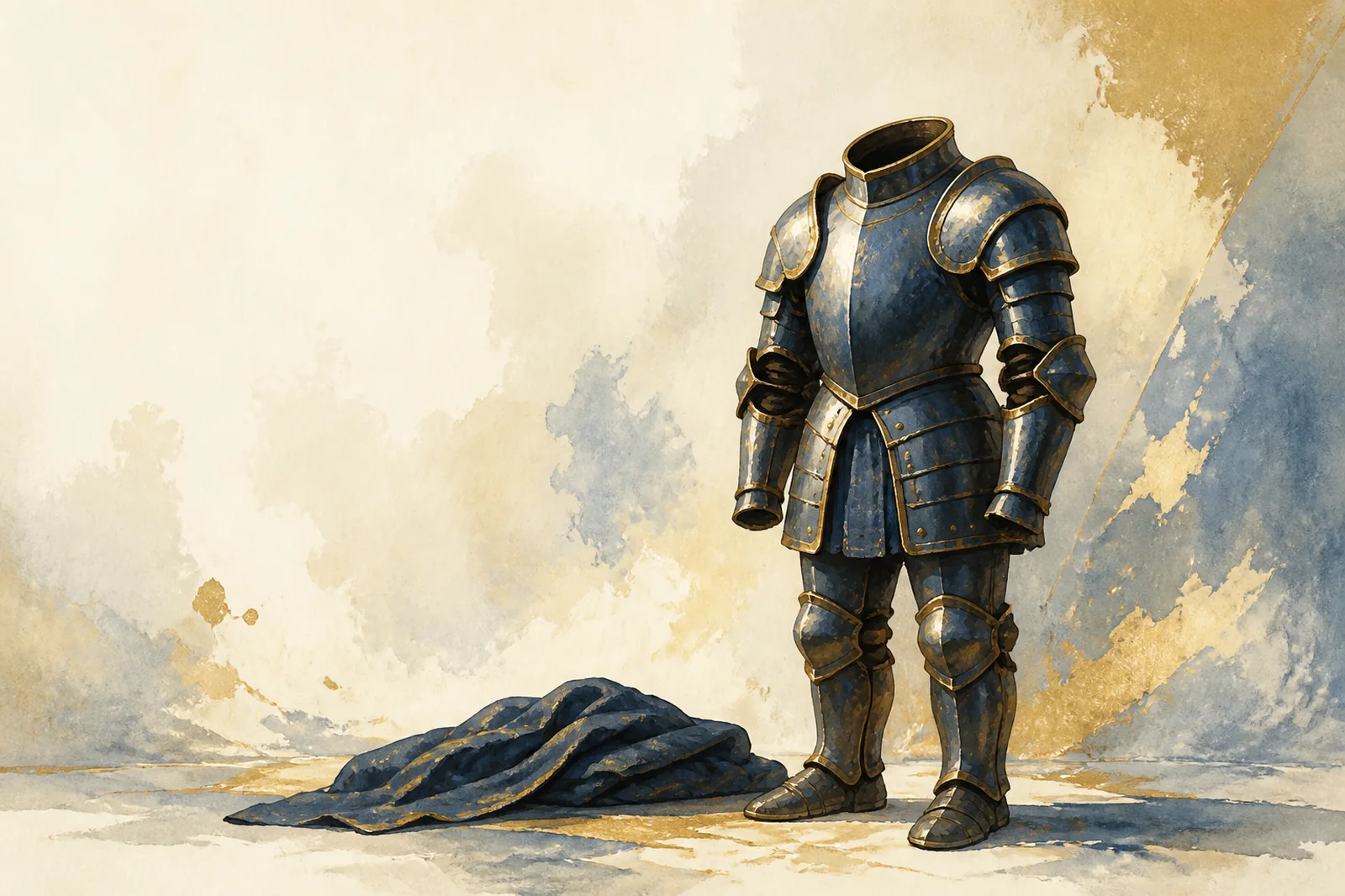
How do we know whether the life we are living now is a lesser version of a better one we could have? Maybe we have grown so accustomed to it that we forget life can be different, or better. I, for one, don’t always remember that the life I am living isn’t fixed. It is fluid. I can bring God more into my day. I can live with more patience. I can be more present, more mindful and less reactive, more loving and less judgmental. Trauma survivors start off feeling on guard — as if they are constantly playing defense. When we are traumatized, we adapt to the threat. We develop defense mechanisms, narratives, vices, and personas. We put on armor. Those adaptations let us survive and carry our overwhelming pain, fear, and shame. For a time, they feel like a gift. But what helps us survive one season of life is not meant to become our permanent identity.
Eventually the armor begins to weigh us down. The defense that once protected us starts to get in the way of who we are capable of becoming. The hard part is that we have stopped recognizing it as armor. We wear it so long that we become convinced it is simply who we are. Recently, and rather unexpectedly, I began to learn something new about this version of life I was living. The message was that I needed to recognize something unsettling: I no longer knew where I ended and my defenses and armor began. What is me, and what is my armor? What am I still carrying from traumas of decades ago that no longer serves me and can be shed, to make room for something new?
Then something surprised me even more. After beginning to sense there was more to me than my defenses and personas, I found myself speaking to Hashem in a way I never had before. One day, as I prayed, I realized that even many of my prayers had been borrowed. My prayers weren’t mine either. I had always been this person in a cumbersome suit of armor, praying for the things I had been told I was supposed to pray for. And I had prayed for beautiful things. I asked Hashem to help me become a better Jew. I prayed to become a talmid chacham and a tzadik. Those prayers were sincere, in their way. But in that moment I realized something deeper. I had never simply stood before Hashem, in my own words, from the purest part of myself, and asked for what I actually needed most. I had never once asked Him to help me heal. So right then, from the deepest, quietest, purest place inside me, I found myself saying only this: “God… please help me heal.”
That prayer startled me. I realized that becoming the person Hashem created me to be depends, in part, on the courage to bring my real self before Him. The reason I had never prayed for healing was painfully simple. I didn’t know I needed it. I had grown so used to living as my adaptations that I mistook them for myself. To me, this echoes Rebbe Nachman’s words. There are many kinds of life. One kind is lived through borrowed defenses, and, in the same way, through borrowed prayers. A deeper kind of life begins when, with Hashem’s help, we slowly lay down the armor that once helped us survive, discover the person He created beneath it, and find the courage to speak to Him, not in borrowed words, but in our own. We set aside all the sophistication and let our inner child ask, with the utmost simplicity, “Please. Help. Me. Heal.” Rebbe Nachman says it is worth a person praying all the days of his life to be able to say one word to God with absolute truth, even once (Likutei Moharan I, 112).