
We live in challenging times. Not only in the ways that reach the news, but in quieter ways, closer to home. Many of us carry some ache around family that we do not speak about easily. A parent we cannot lean on the way we wished we could. A relationship that went cold, or was never warm to begin with. A closeness other people seem to have, while we quietly wonder why we do not. If any of that lives in you, this is written with you in mind. Our chachomim saw these times coming. The Mishnah at the end of Maseches Sotah (9:15) describes the world of ikvesa d’meshicha, the footsteps of Moshiach, and the hardships klal Yisrael will meet along the way. One by one, the things we once leaned on will fail us, until the only One left to lean on is Hashem Himself. And in that list sits a heartbreak many of us now know firsthand, the breakdown of trust within a family, between parents and their children. So the question is not whether it is painful, but how we are meant to find the good folded inside it.
The difficulty runs deep, because parents are meant to be our first road to Hashem. The Ramban teaches that honoring our parents belongs among our duties toward Hashem Himself, since our parents are His partners in bringing us into the world, so that the honor we give them rises into the honor we give Him (Ramban, Shemos 20:12). Through the relationship with our parents, we grow into a relationship with Him. A child who was loved, even by parents who were not frum, tends to receive Hashem’s love more easily, and to love Him back. Warmth at home becomes warmth toward Heaven. If a child struggles to trust the parents in front of him, how will he come to trust the Father he cannot see?
Before the answer, one thing needs saying plainly. For some who are reading this, distance from a parent is not a symptom of anything broken in them or their parent. It is the sane and sometimes necessary response to real pain, and now and then it is the healthiest thing a person has done. This is not a rebuke, and it is not a claim that the closeness you did not have was your fault or theirs. It is the assurance that the first road being closed to you does not lock you out of the destination it leads to. Because the truth is that honoring parents, for all its power, was never meant to be the only way to reach Hashem. It is the natural way, the way paved for most. It is not the sole way. Dovid HaMelech says something remarkable in Tehillim (27:10): though my father and mother have abandoned me, Hashem will gather me in. Rav Hirsch explains that Dovid is describing the shape of his emunah: even if my parents were to abandon me, I would not lose my faith in You, and I would still trust with my whole heart that You will hold me.
How does a person build such a thing? The honest answer is the one that is always true and never easy: through hard work and tefilla. It is, in the end, the journey Avraham Avinu made before any of us. He discovered Hashem with no parents to point the way. His father Terach was an idol worshipper, and the midrash tells us he handed his own son to Nimrod to be thrown into the fire for refusing to bow to idols (Bereishis Rabbah 38:13). Avraham found Hashem not because of his father, but in spite of him. It was not a simple road. It held trial and error, mistakes, friendships made and lost, trust built and broken. According to the Rambam, Avraham did not arrive at his recognition of Hashem until he was forty (Rambam, Hilchos Avodah Zarah 1:3). And we can tap into that resilience. The spiritual muscle that Avraham Avinu built became a spiritual inheritance for us to use (Ruach Chaim, Avos 5:3). The parent he never had, he found in Hashem.
And here is the question that matters most for us. What kind of family does a person build when he had no parents to model himself after? And yet Avraham went on to build the finest family in the history of the world, klal Yisrael itself. Hashem says of him, I have loved him, because he commands his children to keep the way of Hashem, to do tzedakah and justice (Bereishis 18:19). So where did Avraham learn to parent? He built his relationship with Hashem, observed closely how Hashem cares for His creations, and raised his own family in that image. And that is available to anyone. The reader who fears she has no template to follow has, in truth, the very same template Avraham had, along with whatever steady and loving people she can gather around her now.
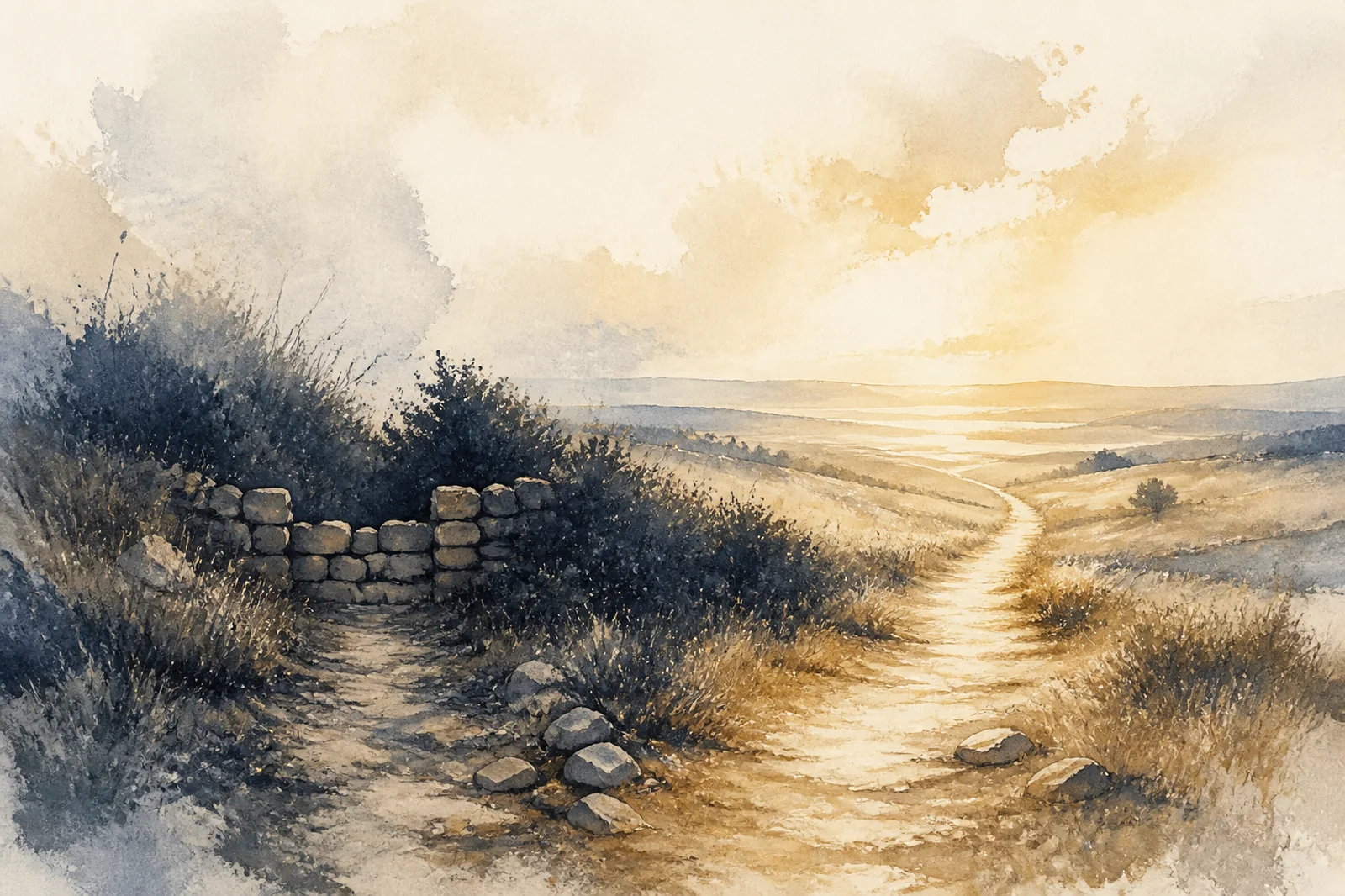
So we return to where we began. Can a child come to a real relationship with Hashem without a healthy relationship with his parents? Yes. Can he go on to build a warm and loving family of his own? Yes. Is there a magic bullet that repairs it all overnight? No. It will take real work, and much tefilla, and, hopefully, the help of good people along the way. It helps, more than we sometimes admit, to have had at least some healthy love somewhere along the way. It does not have to have come from a parent. A teacher who believed in you, a mentor who was steady, a friend who stayed, a grandparent whose door was always open. Even one relationship that showed you what warmth and trust can look like gives the heart a picture to build from. The Hebrew word for hope is tikva, and it grows from the same root as kav, a line. There is already a line drawn, a trail already paved, walked long ago by Avraham and by Dovid and by every soul since who found their way to Hashem the harder way. The path exists. What remains is for us, and for our children, to walk it.
A few questions to sit with: Where in my life have I felt truly held, and by whom? It does not have to be a parent. Whose love, over the years, showed me something true about the way Hashem loves me? If my relationship with a parent is a place of pain, can I let this be an assurance that the road being hard does not mean it is closed? What is one small piece of the life, or the family, I hope to build, and what would it take to begin?